The DMCA repeat-infringer rule for automated publishers
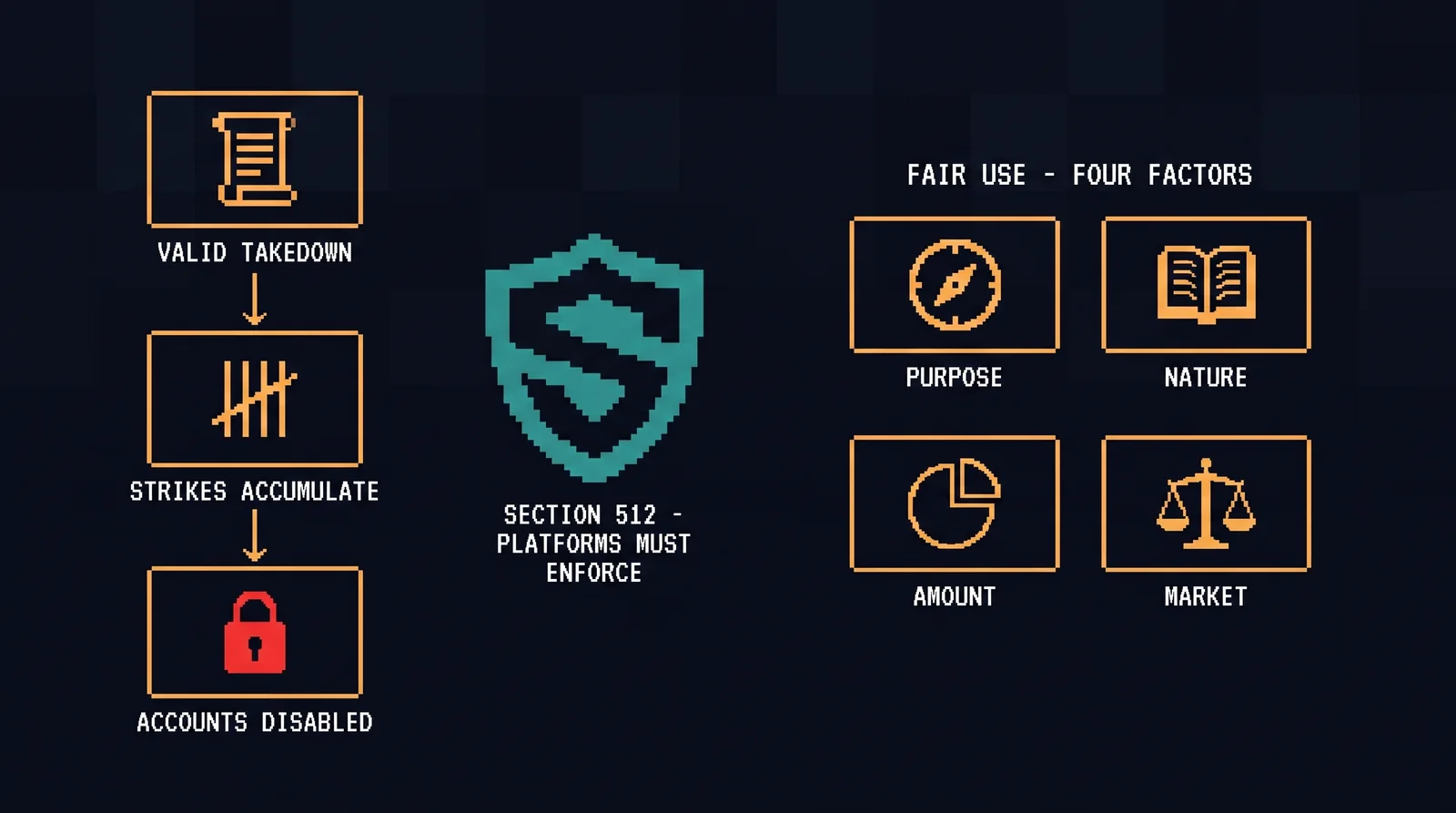
Under §512 of the DMCA, a platform's safe-harbor immunity is conditioned on maintaining a repeat-infringer termination policy — which means Meta disabling the accounts of repeat infringers is not a discretionary policy choice but a legal requirement the platform cannot decline to enforce without forfeiting its own protection.
CLAIMS CARRY THEIR CONFIDENCE: DOCUMENTED = STATED BY THE PLATFORM OR IN A CITED PUBLIC SOURCE ·INFERENCE = REASONABLE DEDUCTION, NOT CONFIRMED · UNKNOWN = NOT PUBLIC, SAID SO INSTEAD OF GUESSED
How the takedown machinery runs at Meta
- Meta operates a dedicated global IP Operations team and states that valid reports are actioned "typically within a day or less." DOCUMENTED
- Users are notified of takedowns and may file a DMCA counter-notification.DOCUMENTED
- Meta "disable[s] the accounts of repeat infringers in appropriate circumstances" — across copyright, trademark and counterfeit, applying to profiles, accounts and Pages.DOCUMENTED
Why the platform cannot look away
The repeat-infringer rule is the part automated publishers most often misread as negotiable. It is a US statutory requirement: safe-harbor protection under §512 is conditioned on the platform maintaining and enforcing a repeat-infringer termination policy. Meta cannot decline to enforce it without forfeiting its own immunity for everything users upload.DOCUMENTED For a publishing operation this changes the risk model completely: no relationship, no scale, no appeal to reason makes strike accumulation survivable, because the platform's own legal position depends on terminating you.
"Transformative" does not mean "transformed"
Fair use is a four-factor analysis decided case by case — the purpose and character of the use, the nature of the original, the amount taken, and the effect on the market for the original.DOCUMENTED Two findings matter for anyone tempted to automate their way around it:
- "Transformative" is a legal term of art. It requires adding "new expression, meaning, or message." A codec change, a crop or a pitch shift alters the encoding, not the expression — the engineering word and the legal word are false friends. DOCUMENTED
- Courts have rejected "posting to social media is inherently transformative." In litigation over a photographer's work, a district court held exactly that posting was not fair use. Redistribution at scale, for commercial gain, taking whole works, substituting for the original in its market is adverse on all four factors at once. DOCUMENTED
What this means for an automated publisher
- Rights are a launch gate, not a defense strategy. The only position that survives the machinery is never presenting it a valid claim: publish what you own, license, or have partnership clearance for — proof attached before launch.
- Track strikes as first-class state. An operation that doesn't know its own strike count across accounts is navigating toward a statutory cliff with no altimeter.
- Honor stay-down across every account you operate — a takedown's obligations follow the material, and re-uploads from a sibling account read as exactly the repeat pattern §512 exists to terminate. INFERENCE (the operational readings; each legal input above is documented)
Sources
- Meta — Intellectual property and copyright reporting (IP Operations, notifications, counter-notification, repeat-infringer statements)
- U.S. Copyright Office — Section 512 (the safe-harbor conditions, including the repeat-infringer termination requirement)
- This guide describes documented platform statements and statute; it is not legal advice.